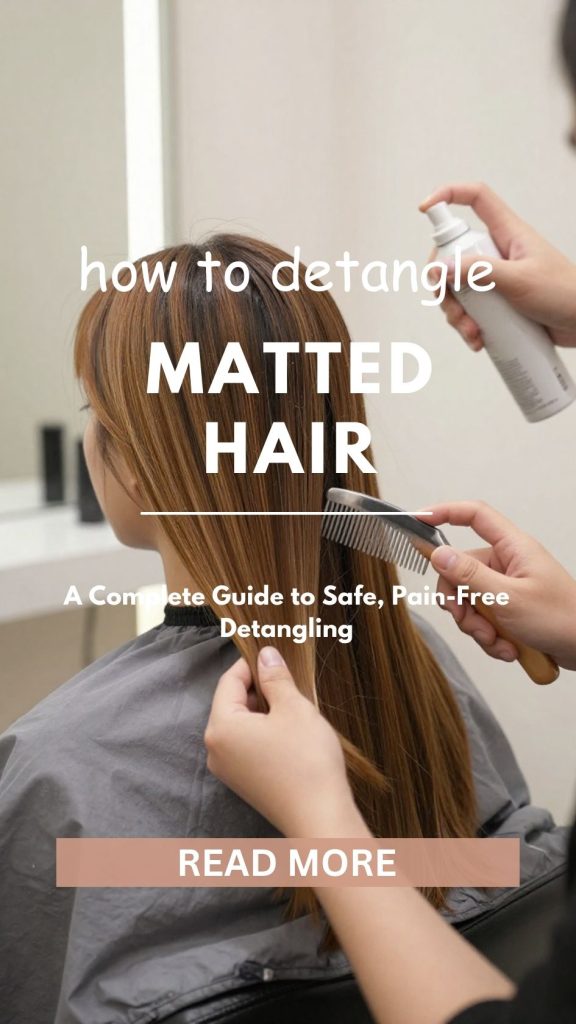
How to Detangle Matted Hair: A Complete Guide to Safe, Pain-Free Detangling
Matted hair can be one of the most stressful hair problems to deal with. Whether it happens after skipping a few detangling sessions, wearing protective styles for too long, or simply waking up with an unexpected knot, the struggle is real. But the good news is this: matted hair can almost always be detangled at home when you approach it gently, patiently, and correctly. In this guide, we’re going to walk through everything you need to know—what causes matting, how to prepare your hair, step-by-step solutions, and how to prevent it from happening again. What Causes Matted Hair? Matting happens when individual hair strands twist tightly around each other and lock together. In the beginning, it may just look like a small knot, but when ignored, it eventually becomes a dense cluster that’s difficult to separate. People with curly, coily, long, or dry hair are more prone to matting because their strands naturally cling and wrap around each other. Common Causes Include: Understanding the root cause helps you avoid future tangles and keep your hair manageable. What NOT to Do Before Detangling Before you start, it’s important to know what can actually make the situation worse. Many people panic and begin pulling or brushing aggressively, which almost always leads to breakage. Avoid: These habits can cause irreversible damage or unnecessary hair loss. The goal is gentle, strategic detangling—not force. What You Need to Detangle Matted Hair To make the process easier, prepare your tools beforehand. A wide-tooth comb is essential, but your fingers will also play a major role. You’ll also need slip-rich products—things that make your hair feel slippery and easier to separate. Helpful Tools Recommended Products These products soften the hair and make the detangling process far more manageable. How to Detangle Matted Hair (Step-by-Step Guide) Detangling matted hair is best done slowly and patiently. Rushing or yanking at knots will only make them tighter. Consider this a self-care moment—breathe, take your time, and treat your hair gently. 1. Section the Hair Start by dividing your hair into smaller sections. Working in controlled portions helps you focus on one knot at a time without tangling the rest of your hair further. Each section should be secured with a clip, making the whole process much easier to manage. 2. Apply Oil or Conditioner Generously Once your sections are ready, it’s time to apply products. For extremely tight mats, oil works best because it softens the hair gradually. For moderate tangles, a detangling conditioner provides slip and moisture. Coat the matted areas generously and let the product sit for 10–20 minutes. This alone will loosen some knots and make finger detangling far less painful. 3. Start With Finger Detangling Finger detangling is the gentlest way to tackle knots. Instead of combing immediately, use your fingers to slowly pull apart sections of the tangle. Work from the bottom of the knot and gently ease it open. You’ll notice that your hair responds better to this method, and it minimizes breakage significantly. 4. Use a Wide-Tooth Comb From Ends to Roots Once the knot starts to loosen, pick up your wide-tooth comb. Begin at the ends and gradually work toward the roots. This upward approach prevents tightening the knot and allows you to remove shed hairs stuck inside the tangle. If you feel resistance, stop, add more product, and continue slowly. 5. Reapply Product if Needed Throughout the process, be prepared to add more conditioner or oil whenever you encounter stubborn knots. Trying to force it will cause hair fall, so always keep the hair slippery and soft. 6. Rinse and Deep Condition After detangling, it’s essential to restore moisture. Rinse your hair gently with lukewarm water and follow up with a deep conditioner. Leave it on for at least 10–20 minutes to nourish and repair any damage caused by the matting. Home Remedies That Help With Matted Hair You don’t always need expensive products. Simple home ingredients can make detangling easier. Oils like coconut, olive, or argan penetrate the strands and soften them effectively. Aloe vera gel provides slip and hydration, making it easier to separate twisted hair. Another popular DIY remedy is a conditioner-and-water mixture. Sprayed directly onto tangles, it helps loosen hair without weighing it down. When Water Helps—and When It Doesn’t This part confuses many people. Water can be both helpful and harmful depending on the severity of the matting. If your hair is only lightly tangled, adding water with conditioner can help loosen it easily. But if your hair is severely matted, water can actually make the knots tighten and shrink. Dry detangling with oil first, followed by water later, is often the safest approach. When You Should See a Professional Sometimes, the matting is too dense or too large to handle at home. If the knots are extremely compact, forming dreadlock-like clumps, or causing significant pain, visiting a professional is the best option. They have specialized tools and techniques to detangle safely without damaging your hair or scalp. How to Prevent Matted Hair in the Future Prevention is always easier than repair. To avoid matting, make detangling a regular part of your hair-care routine. Brushing your hair daily, especially before bed, reduces the chances of tangles forming. Switching to a satin or silk pillowcase also helps reduce friction while sleeping. When wearing protective styles, keep your hair moisturized and avoid keeping the style for too long. After removing braids or weaves, always detangle immediately to prevent hidden knots from turning into mats. Final Thoughts Detangling matted hair takes patience, but it’s definitely possible to get your hair back to being soft, smooth, and manageable. With the right approach—gentle finger detangling, lots of slip, and slow, careful combing—you can undo even tough tangles without damaging your hair. And once you understand the causes and prevention strategies, you’ll be far better prepared to keep your hair tangle-free in the future.